
When we think of fall, we usually think of reds, oranges, and yellows. We will see what is happening to plants this time of year and discover that fall is also pink earthworms, gray pill bugs, brown earth, green buds, and many other colors.
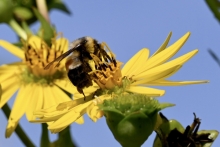
When many people think about bees, they picture a honey bee. But our native bees are so much more fascinating, valuable, and imperiled. Through place-based project learning and participatory science projects, your students can explore nearby nature and meet the wild bees in their schoolyards and beyond.
On April 16, 2025, Brian Counselman, high school teacher at Malcolm Shabazz City High School, and Elizabeth Braatz, coordinator of DNR's Bumble Bee Brigade, shared how they engage students by investigating bees.
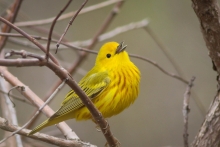
Wherever we live, we share our spaces with birds. Brian Collins (Teacher of the Year and birder extraordinaire) and Naomi Hadley (Natural Resources Foundation Birdathon Coordinator) will explore how to introduce your students to these fascinating wild neighbors.
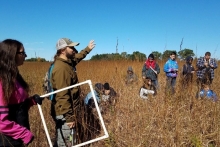
Since 2010, High Marq Environmental Charter School has offered a project- and place-based learning alternative for students in and around the Montello School District in rural Marquette County, Wisconsin. The FIELD Corps model of learning through discovery and student inquiry has been at the root of our school’s success from the beginning.
FIELD Edventure Story
When Crestwood Elementary School approached FIELD Edventures, they already had a strong investment in outdoor education. Every student participated in “Outdoor Education Mondays” where community volunteers would take classes into the school forest and garden. The staff, however, desired a more integrated approach to outdoor education.
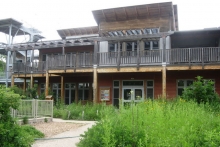
Urban Ecology is the story of how the UEC operations and programming began in a double-wide trailer at Riverside Park, Milwaukee, to expand to three elegant LEED-certified Urban Ecology Centers annually serving more than 60 schools and 200,000 children, families, and adults of all ages.

Simply put, phenology is the study of seasonal changes. At home, the easiest way to get started with phenology is to simply begin paying attention to what’s happening outside your window. It doesn’t matter how small or large your spot is, as long as you are able to observe it consistently.